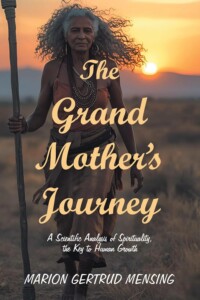
Title: The Grand Mother’s Journey: A Scientific Analysis of Spirituality, The Key to Human Growth
Author: Marion Gertrud Mensing
Publisher: Balboa PressUK
ISBN: 979-8765216163
Pages: 136
Genre: Nonfiction / Counseling & Psychology
Reviewer: Anthony Avina
Pacific Book Review
 One of the most fascinating aspects of both the scientific and spiritual communities in recent years has been the shared interest in exploring what human consciousness really is. Are humans simply electrical impulses powering an organic machine in the form of a body, or is the human consciousness a physical energy that has the potential to ascend beyond the material world? These questions continue to persist in the exploration of both science and spirituality alike, and yet there are many in the modern world who see the potential for both possibilities to be correct.
In author Marion Gertrud Mensing’s The Grand Mother’s Journey: A Scientific Analysis of Spirituality, The Key to Human Growth, the author explores the concept of consciousness and what it means to be human in the world as it exists today. With evidence piling up showing humanity is on the brink of some sort of collapse as a society, the need to remind the human race what humanity truly is has never been more apparent. In this book the author focuses on the need to move beyond the material world that drives many people and instead embrace the idea of creating and sharing what people already have around them, while also embracing the qualities of the Mother and Grandmother spirits/energies without feeling tied to the feminist movement.
Insightful and powerfully written, the author manages to pack a lot of detail into such a short read while keeping the reader invested. The book begins by exploring the concept of the Mother, or a universal concept of God not as a singular entity in one or more religions, but instead as a cosmic force of nature and human experience. The way the author brought to life the ways in which so many religions and belief systems throughout human history have tried to separate and assign identities to various aspects of creation, even in Indian belief systems where consciousness is assigned to Lord Shiva and Goddess Shakti is the creative power of the universe, made this book feel so educational and knowledgeable from a spiritual journey perspective.
Readers who enjoy nonfiction books, especially those which blend concepts of philosophy, psychology, and spirituality into one cohesive insight, will absolutely love this book. The author balances the book with spiritual and faith-driven explorations of various mythos and beliefs with real-life historical figures and experiences that readers can easily identify with, such as Bishop Tutu’s experiences in South Africa during Apartheid and his connection to Nelson Mandela and the belief in Ubuntu, which the Bishop called the essence of being human. This book is not only educational but inspiring as it showcases the depth of connection humanity has to the greater universe, even if people have different names and ways of looking at that universal force. This is more than a book, it’s a guide to becoming. A must-read for seekers, thinkers, and anyone yearning for deeper meaning.