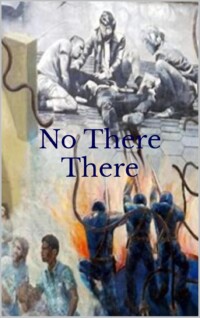
Title: No There There
Author: Charles Weeden
Publisher: CreateSpace Independent Publishing Platform
ISBN: 978-1983720871
Pages: 156
Genre: Non-Fiction / History/ Memoir / Philosophy / Political
Reviewer: Barbara Bamberger Scott
Pacific Book Review
 Author Charles Weeden recalls the astounding history of an area known as People’s Park, its culture and prospective usage dramatically revealed by the Sixties generation in Berkeley, California, centered on a senseless killing. The region was a hotbed for new drugs known as psychedelics such as LSD, believed to connect users of higher realities through sweeping etheric visions. This spawned a movement of college students and others to re-form the known world, and that intention found fodder in the possibilities of an area where all who wished could coalesce and enjoy these newfound experiences.
Weeden’s saga begins when, as a member of the staff of the newly conceived newspaper, the Berkeley Barb, he had an unusually close view of the killing, by local police of a protestor in the park, on a day that would become known as Bloody Sunday. That death haunted Weeden and prompted the creation of this dynamic work, examining the cultures, subcultures, legal entanglements and political webs that combined to characterize a new wave of American consciousness.
Drawing on memories from observers and survivors of those stirring years, including teachers, professors, family members and students on the Berkeley scene, and from the disrupting background of the Viet Nam conflict, Weeden brings his cinematic chronicle into the light, episode by disturbing episode. People’s Park began as a location for future dormitories and athletic fields to be constructed by its owner, the University of California. Many delays left the area partially cleared, so a group of activists took it upon themselves to transform the area into a usable neighborhood park. The resulting uproar, with incursion by police and the injuries and death of many of those participating in the reconstruction effort, would provide fodder for the new subculture, drawing together those seeking, and creating, lives of higher, unconventional, meaning and purpose.
Weeden avers that in composing his remarkable account of the People’s Park, aided by a plethora of contributors, witnesses and victims, he became entranced in a search for a broader definition of “meaning” that sprung from what he solidly conveys as a meaningless death. With portraits of such significant influencers as Gertrude Stein, Janis Joplin, Ronald Reagan, and the personal, poignant perspectives of those who were there despite the philosophical assertion that there was “no there there,” Weeden reveals a “lost” generation that found itself in shared aspirations and the persistent movement for change at all levels of existence.
His previous works such as Donahue Pass and Poems of Yosemite underpin his gifts as a wordsmith, so though he has taken a modest stance in the creation of this remarkable tale, Weeden’s latest work will doubtless be lauded by readers across a wide spectrum of interest and aspiration. With an engaging and contemplative perspective, Weeden challenges readers to examine the assumptions that shape how they see the world.